Dyslexia Awareness Month
KoolMinds Team
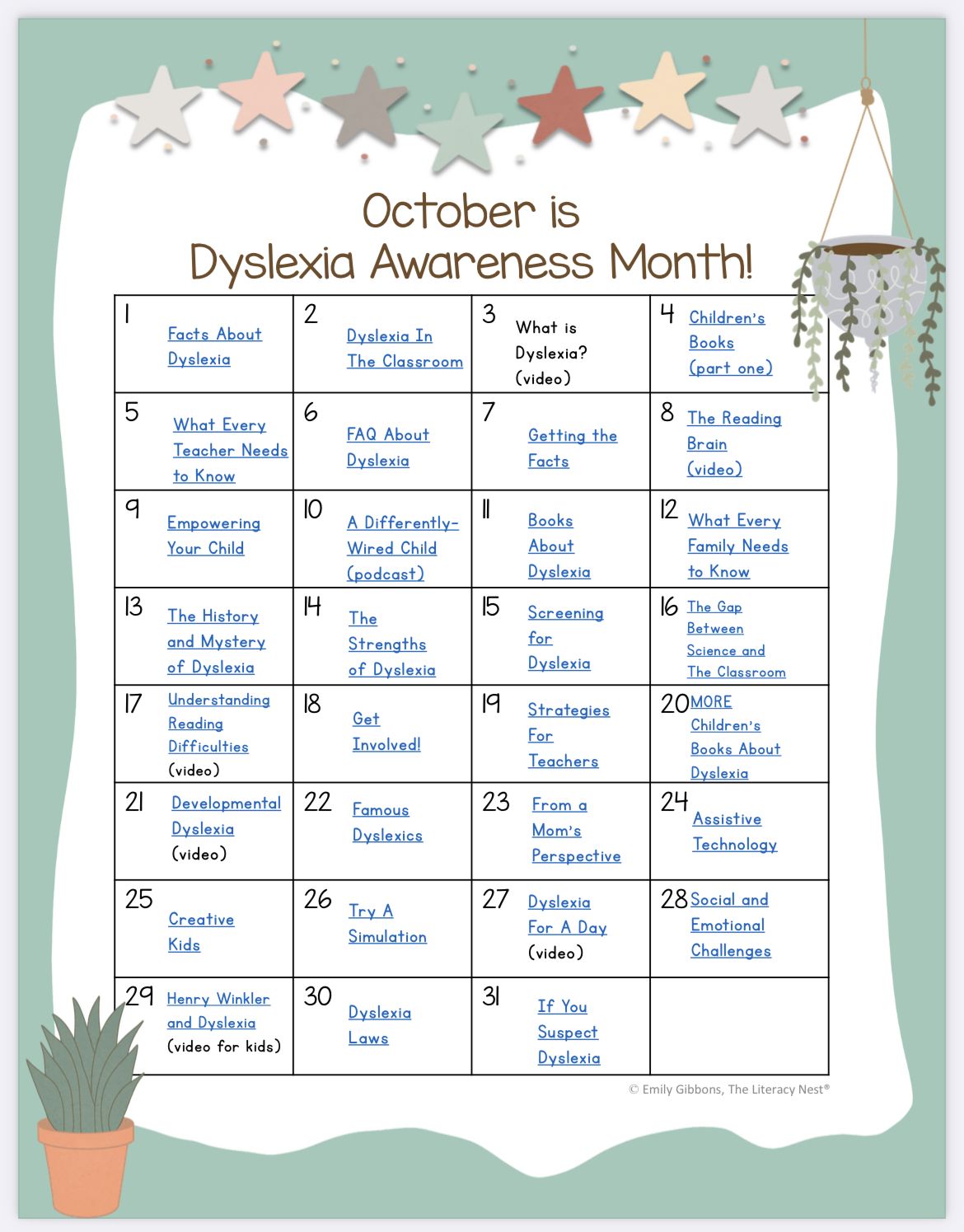
October is Dyslexia Awareness Month! Our team here at KoolMinds wanted to take this opportunity to create awareness, share information and focus on a subject that we are very passionate about.
The Mayo Clinic defines dyslexia as "a learning disorder that involves difficulty reading due to problems identifying speech sounds and learning how they relate to letters and words (decoding). Also called reading disability, dyslexia affects areas of the brain that process language." i Dyslexia is very common. In the United States, NIH research has shown that dyslexia affects 5-10% of the population, with estimates as high as 17%ii. Dyslexia is a lifelong condition but there are supports, teaching approaches, and strategies to help them manage their challenges and thrive in school and beyond.
The Mayo Clinic defines dyslexia as "a learning disorder that involves difficulty reading due to problems identifying speech sounds and learning how they relate to letters and words (decoding). Also called reading disability, dyslexia affects areas of the brain that process language." i Dyslexia is very common. In the United States, NIH research has shown that dyslexia affects 5-10% of the population, with estimates as high as 17%ii. Dyslexia is a lifelong condition but there are supports, teaching approaches, and strategies to help them manage their challenges and thrive in school and beyond.
Common Signs of Dyslexia
Young Children:
-
Delayed Speech
-
Mixing up the sounds and syllables in long words
-
Chronic ear infections
-
Severe reactions to childhood illnesses
-
Constant confusion of left versus right
-
Late establishing a dominant hand
-
Difficulty to tie shoes
-
Trouble memorizing their address, phone number, or the alphabet
-
Can't create words that rhyme
-
A close relative with Dyslexia
School-aged Children:
-
Dysgraphia (slow, non-automatic handwriting that is difficult to read)
-
Letter or number reversals continuing past the end of first grade
-
Slow, choppy, inaccurate reading
-
Terrible spelling
-
Often can't remember sight words or homonyms
-
Difficulty telling time with a clock with hands
-
Trouble with multiplication facts
-
When speaking, difficulty finding the right word
-
Extremely messy room, backpack, and desk
-
Dreads going to school
Teenagers and Adults:
(all the above symptoms, plus:)
-
Limited vocabulary in writing
-
Extremely poor written expression
-
Unable to master a foreign language
-
Difficulty reading printed music
-
Slow reader
-
Dreads writing memos or letters
-
Difficulty putting thoughts onto paper
-
Terrible speller
-
May have to read a page 2 or 3 times before understanding it
Resources to learn more about Dyslexia
Here are some great articles that will teach you more about dyslexia:
-
Dyslexia Basics (Reading Rockets)
-
Understanding Dyslexia (Child Mind Institute)
-
What is Dyslexia (Understood)
-
Self-Assessment Tool (International Dyslexia Association)
Click on the links below to learn more about these organizations that provide information and advocacy for people with learning disabilities:
-
International Dyslexia Association
-
Learning Disabilities Association of America
-
National Center for Learning Disabilities
-
Division for Learning Disabilities of the Council for Exceptional Children
-
Understood
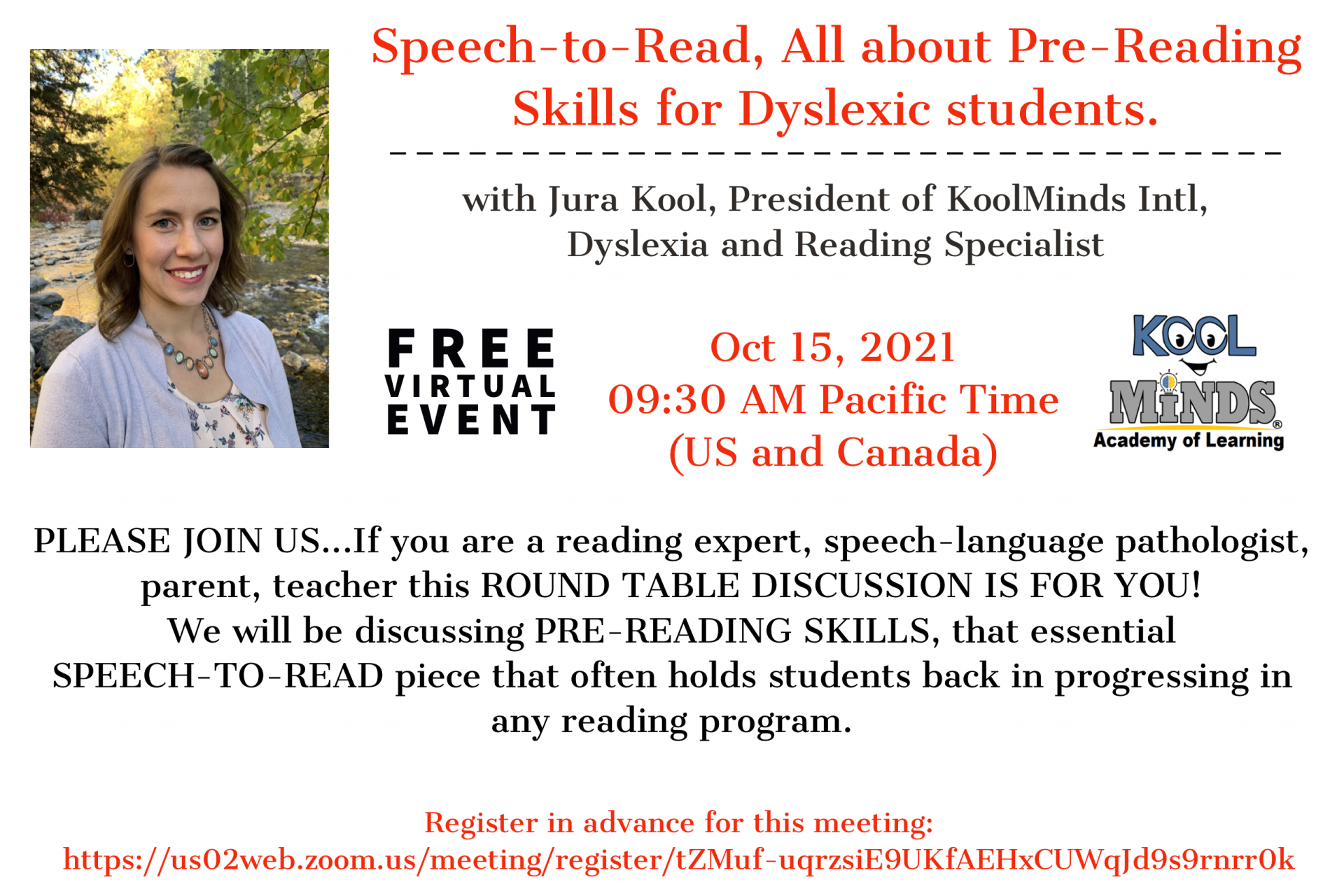
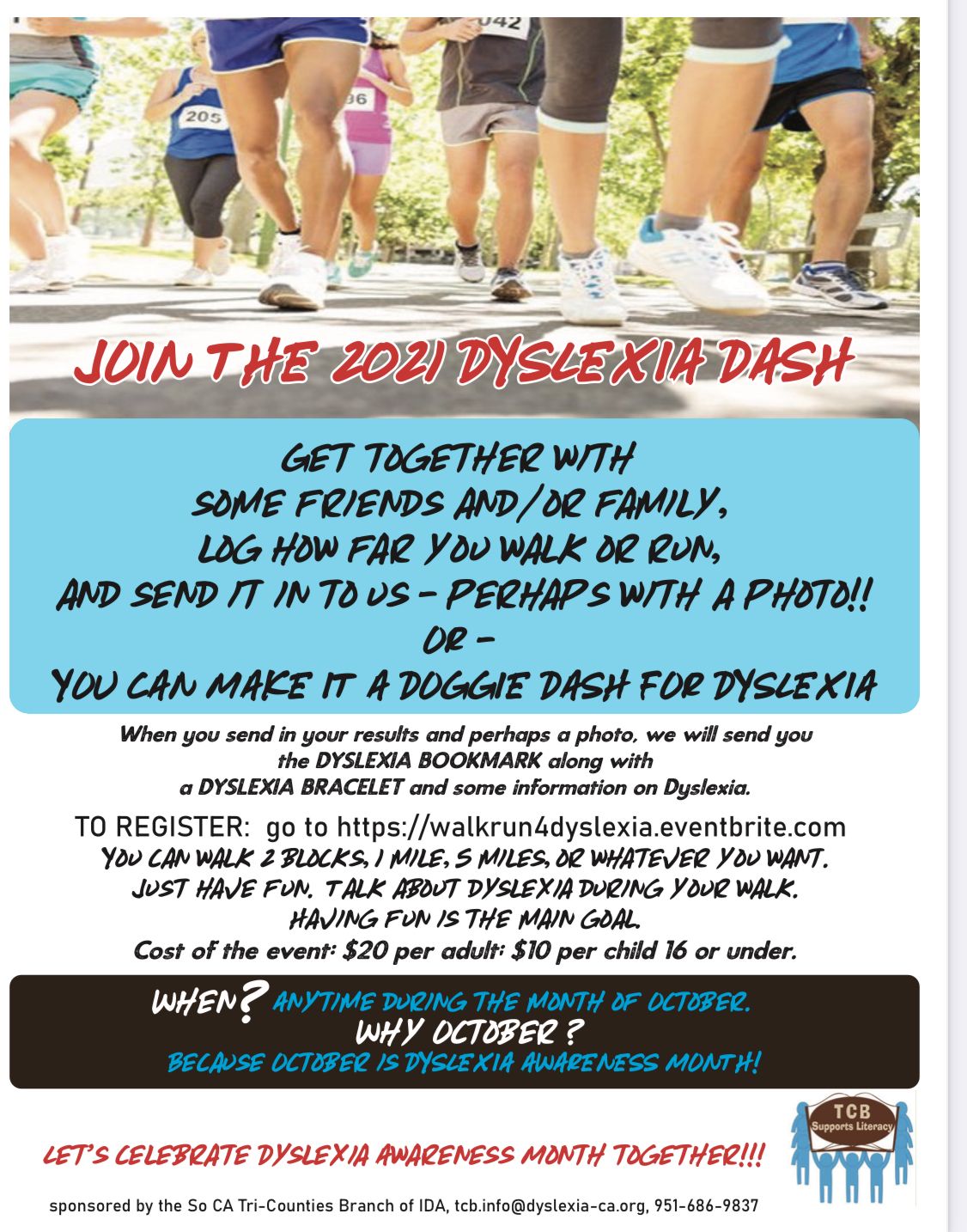
Dyslexia Awareness Month Events & Resources
Click here to learn more about Dyslexia and contact us to find out how KoolMinds can help!
Sources:
[i] Mayo Clinic Staff. Dyslexia. 1998-2021 Mayo Foundation for Medical Education and Research (MFMER) Accessed 4 October 2021. Dyslexia - Symptoms and causes - Mayo Clinic
[ii] University of Michigan. Dyslexia Myths and Facts. Accessed 4 October 2021. Dyslexia Myths and Facts | Dyslexia Help at the University of Michigan (umich.edu)
Like this page? Share it with your friends!
https://www.koolminds.com/blog/dyslexia-awareness-month
Who We Are
Dedicated team of instructors, teachers, professionals, moms, dads, and communities looking to make a difference in these bright but struggling students.
Featured Links
Copyright © 2025
#1 This is a title
#2 This is a title

#3 This is a title
Thank you
for your interest!
A KoolMinds representative will be in touch soon.
If you'd like to speak to someone now,
Please call us ➜
Got a Question?
Call or Text Us Now
866-566-5637
May 27, 2021
To Whom It May Concern
I am a pediatric neuropsychologist, licensed to practice in both Nevada and Utah. My practice currently offer comprehensive neuropsychological and psychological evaluations for children between 2 1/2 and 17 years of age.
Our team offers expertise in evaluating and diagnosing a wide range of childhood concerns and diagnoses, including Autism Spectrum Disorder, Attention Deficit/Hyperactivity Disorder, Learning Disorders, Intellectual Disabilities, Developmental Delays, Communication Disorders, Anxiety, Depression, and Mood Disorders, Obsessive-Compulsive Disorder, and Behavioral Disorders. We also offer evaluation for giftedness.
Given the diversity of the population that we serve, our team works with children who struggle with learning for various reasons on a daily basis.
In my opinion, one of the greatest resources for the families in our community who have children in need of specialized intervention to improve their academic abilities, is KoolMinds, founded and operated by Jura Kool.
KoolMinds is the first place that we refer families when their child is diagnosed with a learning difference because we have seen the quality of their service, and the positive impact that they have on their clients, time and time again.
The feedback that we have received from families about their experience with KoolMinds has been overwhelmingly positive.
Ms. Kool is an asset to our community; she is very responsive to questions and has always been able to provide our clinicians as well as our patients and their families with valuable insight and practical tools for improving academic performance and remediating academic difficulties.
When Ms. Kool informed me that she was growing her practice to Utah and Idaho, my first thought was how amazing it will be for families in those states to be able to access her services.
It is exciting to think how many more children and families will have a better quality of life because they will be able to get the help that they need to succeed academically.
In sum, I highly recommend that you consider referring any child with a learning difference to KoolMinds.
Please feel free to contact me if I am able to provide additional information in support of KoolMinds and Jura Kool.
Warmly,Nicole Ann Cavenagh, PhDNV Licensed Psychologist, PY0584UT Licensed Psychologist, 120174472501Pediatric Neuropsychologist
Jura Kool
President & Co-Founder
Jura has been helping students with learning and attention issues since 2009. She is a Reading and Dyslexia specialist, an Orton-Gillingham practitioner, and Educational Advocate.
Jura has done volunteer work as Co-Founder of Decoding Dyslexia of NV where she helps parents with accommodations and resources for students who struggle with Dyslexia. She became passionate about working with students with learning difficulties when she witnessed her own family members struggle with Autism, ADHD, and Dyslexia.
Jura's vision and dream would be for every parent and teacher to understand learning differences and know how to help their students. She has experience with ADHD, Autism, Dyslexia, Dysgraphia, Dyscalculia, ODD, and NLD. She has a background in Psychology, Education, and is currently continuing her education in Linguistics and Cognitive Neuroscience at Brigham Young University.
Jura loves researching about best remedial techniques for students with learning disabilities. Jura enjoys spending her free time with a relaxing movie or good book, reading classics to her children, studying the French language, teaching, traveling, and experiencing new things with her two children and husband. At KoolMinds, she's the Director of Learning and Development and manages the instructional design and support of the programs.
Leslie has a calling to support struggling learners and their families. She has raised two sons who have learning differences, and she is a certified special education teacher. She knows the effect difficulties in school can have on students and their families, and she has a heart that nurtures and supports while providing learning experiences that lead to academic growth. Leslie loves to spend time with her family, animals, and books. She is delighted to be a part of the KoolMinds family and serve the community through their programs.
Trina is a wife, mom, and grandma who enjoys big family dinners, being creative, learning new skills, baking, and walking. Trina is trained in the cognitive skills program, and has been an instructor for KoolMinds Idaho for 2 years. She has found a home at KoolMinds,thoroughly enjoying watching the success of each client.
Amy has a heart full of service. She has raised, taught, and taxied 5 children, some with identified learning struggles. She is an accomplished pianist and has taught piano lessons for over 10 years. Amy has served as president and advisor for multiple service organizations, including church and youth organizations. Not to mention the countless dozens of cookies sent to neighbors and others in need. Amy became an instructor for KoolMinds in 2018. In her free time, Amy likes to play tennis, read books, and spend time with family.
Eric loves seeing people make changes in their lives that lead to more confidence, peace, and happiness. For 15 years, Eric has worked in counseling and evaluation of children with mental illness and learning struggles. He has 6 years of experience as a clinical supervisor helping his team creatively find ways to help clients make changes and improve their lives. He has over 12 years of volunteer coaching at the local parks and recreation program to help children learn to thrive and be confident. Eric is currently working with KoolMinds creating a business that succeeds, as those they help find solutions for their personal success. In his free time, Eric enjoys hanging out with his family, going on vacations, and working in his garden.
“Goldilocks took a big gulp of porridge, and explained, ‘This is too cold!’”
Kathryn often prodded her father to tell her this fairytale when she was a kid. Now this story serves as a reminder for her to teach in a way that is ‘just right' for each learner. Kathryn has worked as a residential title searcher and an elementary school teacher. She enjoys picture books, time with family, art, tennis, gardening, hiking, playing instruments, and learning. She considers it a great privilege to work with the students and families in her community.
Hello, my name is Tiffany!
I am a certified elementary school teacher, but first and foremost, I am a mother to three beautiful children ages 8, 6, and 3.
I received my bachelor's degree in Elementary Education from BYU, and I have worked with children in various capacities for over 17 years. I've taught 1st, 2nd, and 5th grades in the public schools and taught reading and art at a Montessori preschool.
After the birth of my first child, I became a private tutor, working with many neurodivergent children. For the past four years, I have worked as a private homeschool teacher, creating a fun and engaging learning experience for multiple age groups.
When I'm not teaching, I love to be out in nature with my family, hiking, camping, or eating S'mores. I am thrilled to provide a personalized learning experience for your child!
My name is Mandee. I have over 10 years of experience working in special education classrooms, as well as several years of experience working with individuals with disabilities in other capacities.
One thing that I have learned through my professional and personal experience is that there are so many children with learning gaps, in which traditional learning is not as effective as we would like.
With my background being so focused on behavioral aspects of learning, I am incredibly excited to be part of a program that focuses on executive functioning skills to help fill learning gaps.
I am a full-time special education teacher, so my hours align really well with those that need after school and holiday schedules. I look forward to working with you.
I recently returned from serving a two-year mission in Oregon, where I discovered how fulfilling it is to help people learn and grow.
I have prior experience as a tutor and teaching assistant, working one-on-one and in groups with students from elementary through high school.
I especially enjoy the challenge of finding creative ways to explain concepts so that students can have that exciting “aha!” moment.
Currently, I’m studying biology in college and have a strong background in both math and science, but I enjoy supporting students across many subjects.
My goal is to help students not only succeed academically but also build confidence and find joy in learning.
With more than 10 years of experience in community outreach and five years of teaching, I understand the importance of empathy, relationship building, and communication when working with youth. My journey as an educator has taken me from tutoring high school students one-on-one in English, reading, and writing, to teaching first- and second-year university students at Mae Fah Luang University in Chiang Rai, Thailand. I have also worked as a community advocate for over a decade, serving immigrant and refugee families in Salt Lake City and Logan, Utah. As a community advocate, I connected families to local resources, led and organized young female empowerment programs, interpreted for Spanish-speaking families, and helped youth with the college application process.
My experiences in education and community outreach have deepened my belief in the importance of an education. I’ve seen firsthand how personalized learning can build a student’s confidence and potential, especially when they feel supported and understood. Tutoring allows me to combine my love for teaching with my passion for empowering young minds. Empathy and compassion are the foundations of my teaching philosophy as I aim to create a warm, engaging space where students feel comfortable learning and participating in activities. I am eager to make a meaningful impact on each student’s academic journey and personal growth by helping them discover their strengths.
Hi, I’m Cynthia!
I have my associates degree from Salt Lake Community College; I am currently attending University of Utah getting my bachelor's degree in special education for the Deaf and hard of hearing.
Currently I am a substitute teacher for the Deaf and hard of hearing in Salt Lake City and Springville.
I love being able to help students achieve their goals even if they don’t seem achievable at the time. I want to make a positive impact on every student I help and make them build confidence in themselves. I want students to be engaging in their work and I want it to always be enjoyable for them.
What do I like to do on my free time? I love anything outdoors, traveling, going to concerts, spending time with my family and I love cooking/baking.
I am so excited to be able to do what I love by helping and making an amazing impact.
Hello, I am Katherine.
I have recently earned my master's degree in secondary education with an endorsement in English literature, and I have experience as a general education teacher at both the high school and middle school levels.
Currently, I work in an elementary special education resource room as a paraprofessional where I support students' individual needs and help them grow in confidence and skill.
I am passionate about creating supportive, engaging learning environments and love seeing students make progress in ways that matter to them.
Outside of teaching, I enjoy spending time outdoors, reading, and coaching cross country.
Tammy loves helping students discover that they can succeed in their education. With a degree in Math Education and Psychology from Brigham Young University, Tammy has taught junior high math, as well as worked as a math aide and tutor at both the elementary and secondary levels.
Her background gives her a deep understanding of how to support learners at every level. Tammy focuses on building confidence, strengthening skills, and making learning engaging. She believes every student can grow when given the right tools and encouragement.
When she’s not teaching, Tammy enjoys baking, playing the violin, and spending time with her family.
Hailee is in West Jordan Utah. She has worked in the school district for 3 years now. One year helping Special ED in elementary schools and this will be her second year doing hall monitoring in the middle school!
She loves working with children and seeing them succeed!
Hi, I'm Erin! I recently graduated from UVU with a degree in Psychology, and I've worked as a reading tutor in the past.
I love helping kids discover their strengths and build confidence in their learning. Working with students is something I truly enjoy-it's so rewarding to see them grow!
Outside of tutoring I enjoy traveling, dancing, playing pickleball and spending time with friends and family. I'm excited to be part of KoolMinds!
Katelynn is a tutor in Riverton, Utah.
She has a bachelor's degree in theatre and an Associate Educator's License, and she is currently earning her master's degree in elementary education.
She loves music, dogs, theatre, and reading, and she is excited to help your child reach their potential!
Hi my name is Kate, I am a student at Brigham Young University studying Early Childhood Education.
I served a mission in the Taiwan; Taipei mission and I had the opportunity to teach children and adults weekly in an English program. I also have been a nanny through the last couple years.
Tutoring helped me a ton in elementary school, and I believe that learning can and should be fun!
What makes Jeremy the best tutor for your child is the fact he always listens to his inner child which guarantees your child will learn while laughing out loud and will love it!
Jeremy has a background as substitute teacher, youth mentor, traveling mad scientist (true story), after-school coordinator, summer camp enthusiast… and customer service/tech support analyst. All this means he can easily connect and build rapport with your child, quickly find what’s troubling them and partner with them to help them succeed.
He’s worked with locals in Utah, immigrants in Texas and inner-city kids in Kansas City. He’s traveled to schools across the state and is more than happy to travel to you. His greatest joy is to be recognized by a former student and give them an enthusiastic high five.
He’s also a huge pop culture and board game nerd and should spend less time on TikTok.
Pamela background is rooted in both education and behavioral health. For the past several years, she has worked as a Registered Behavior Technician, supporting children with diverse learning and developmental needs. she also holds certifications in emotional regulation, trauma-informed care, and special education support.
She was drawn to this field because she has always been passionate about helping children overcome barriers to learning and find confidence in their own abilities. As both a professional and a mother, she has seen how encouragement, patience, and the right strategies can transform a child’s experience with learning. That perspective inspired her to dedicate her career to supporting students not just academically, but also emotionally and socially.
"I love teaching because I believe education is about much more than grades—it’s about building resilience, curiosity, and a love of learning. Every student deserves to feel capable, understood, and valued."
The KoolMinds program stands out for its unique and holistic approach. By addressing learning challenges in a supportive and individualized way alongside cognitive and social-emotional growth, KoolMinds creates an environment where children can thrive. I’m excited to be part of a team that sees the whole child and works to unlock their potential.
Hi, I’m Jacie!
I’ve worked with kids for years as a nanny and have always loved supporting their growth—especially when it comes to reading, language and cognitive learning.
I studied English and humanities in college and will be returning soon to finish my English degree. I also spent time teaching English in Romania, and really enjoyed watching students have those lightbulb moments.
In my free time, I enjoy reading, running, playing pickleball, and hanging out with my nieces and nephews as the favorite aunt.
Noah was born and raised in Florida but also spent some time in Virginia for school before finishing his education at the University of Central Florida, obtaining a bachelor's degree in English literature.
He loves reading, playing guitar, writing, basketball (Go Heat!) and Ultimate Frisbee.
He also enjoys the beauty and nature of Utah.
Adrien Kool is an educator and entrepreneur with a passion for helping children build confidence, critical thinking, and lifelong learning skills.
Through KoolMinds, Adrien is committed to creating engaging educational experiences that help students strengthen cognitive abilities, improve academic performance, and develop the tools they need to succeed both in and out of the classroom.
His vision is to make high-quality cognitive training, academics, and STEAM accessible to families while fostering a love of learning and personal growth in every student.
Through KoolMinds, Adrien is committed to creating engaging educational experiences that help students strengthen cognitive abilities, improve academic performance, and develop the tools they need to succeed both in and out of the classroom.
His vision is to make high-quality cognitive training, academics, and STEAM accessible to families while fostering a love of learning and personal growth in every student.
Created with